So Your Show Got Canceled: A Survival Guide for the Emotionally Devastated Fan
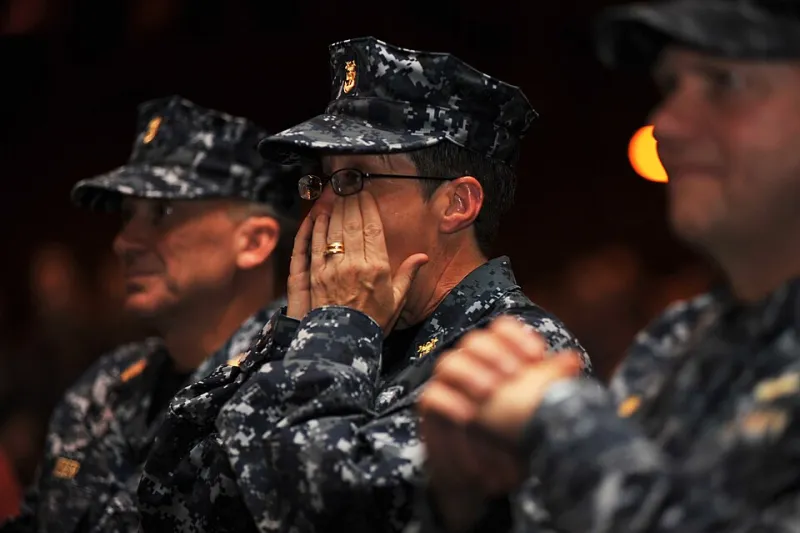
Photo: Official Navy Page from United States of America Mass Communication Specialist Seaman Zachary S. Welch/U.S. Navy, Public domain, via Wikimedia Commons
It happened. The ax fell, the network posted a cold little statement, and suddenly the world you lived in every Thursday night just... ceased to exist. One minute you're refreshing renewal rumors on Reddit, the next you're staring at a two-sentence press release like it personally wronged your entire bloodline.
Welcome to fandom grief. Population: more of us than anyone in a boardroom will ever care to admit.
Here at DittoHolic, we don't do dismissive. We don't do "it's just a TV show." We do obsessed, and we do it proudly. So let's actually talk about what happens when the thing you love gets ripped away — and how to survive it without completely losing your mind.
Why This Hits Harder Than It "Should"
First, let's get one thing straight: the people telling you to "just move on" have clearly never had a parasocial relationship with a found-family ensemble cast. The grief you feel when a beloved show disappears is not a personality flaw. It is, according to actual psychologists, a completely predictable human response.
Researchers who study media psychology have long documented that viewers form what are called parasocial relationships with characters — one-sided emotional bonds that the brain processes in ways surprisingly similar to real friendships. Your nervous system does not fully distinguish between losing a real companion and losing a fictional one you've spent 87 hours with across four seasons. The neural pathways are, frankly, embarrassingly similar.
Dr. Pamela Rutledge, director of the Media Psychology Research Center, has noted that stories serve as psychological simulations — they help us rehearse emotions, process identity, and feel connected to something larger than ourselves. When that story gets yanked mid-sentence? It's not closure. It's amputation.
So no, you're not being dramatic. You're being human. Annoying distinction, but an important one.
The Five Stages of Cancellation (Fandom Edition)
You've heard of the classic Kübler-Ross grief model. Here's the DittoHolic remix, because the stages look a little different in a fandom context:
1. Denial: "This is a test. It's a marketing stunt. They're building hype for a surprise renewal announcement. I'm not worried."
2. Rage-posting: Every social media platform becomes a war zone. Hashtags trend. Petitions circulate. Someone starts a campaign to send the network thousands of rubber ducks or whatever the show's symbol is. You sign everything.
3. Bargaining: "If a streaming service picks it up, I will personally subscribe to every tier they offer, including the one that costs $47 a month and comes with a tote bag."
4. The Scroll Spiral: You rewatch the finale — or worse, the last good episode — on a loop. You read every fan theory about what could have been. You find a Reddit thread from 2021 where someone predicted this exact outcome and you feel deeply betrayed by the universe.
5. Tentative Acceptance: You don't forget. You never fully forget. But eventually you can talk about the show without your voice doing that thing.
What Fan Communities Actually Get Right About Grief
Here's something the mainstream conversation consistently underestimates: fan communities are genuinely good at processing collective loss. Like, surprisingly, impressively good.
When a show gets canceled, the communal mourning that happens on forums, Discord servers, and fan Twitters isn't just venting — it's a form of shared ritual that mirrors the social functions grief has always served. You're not just complaining into a void. You're sitting shiva with people who loved the same thing you did, who understand exactly which scene broke you and why the finale felt like a betrayal.
Fan fiction explodes after cancellations for exactly this reason. Writers in the community essentially say: the story didn't end the way it deserved, so we'll finish it ourselves. That's not delusion. That's agency. That's a community refusing to let meaning evaporate just because a network ran the numbers and shrugged.
Fan art, tribute videos, rewatch podcasts, "what would season five have looked like" threads — these are all legitimate forms of grief work. And grief work, done in community, is how humans have always healed.
Coping Strategies That Actually Help (And One That Definitely Doesn't)
Give yourself a mourning period. Seriously. Block out a weekend, eat whatever you want, rewatch your favorite episodes, and let yourself feel it. Trying to "get over it" before you've processed it is how you end up inexplicably furious at a stranger on the internet six months later.
Write the ending you deserved. Even if you've never written fan fiction in your life, try it. Even just a paragraph. Even just a bullet-pointed outline of what should have happened. Externalizing the story gives your brain somewhere to put all that unresolved narrative energy.
Talk to people who get it. Not your coworker who watched two episodes and called it "fine." Find your people — the ones who have opinions about the lighting choices in season three and whether the writers did the main character dirty. Your grief deserves witnesses who actually understand what was lost.
Curate your feed intentionally. If seeing the cast move on to other projects is making things worse right now, it's okay to mute some accounts temporarily. This isn't avoidance — it's pacing. You'll get there. Just maybe not today.
The one that doesn't help: Spending four hours reading "the real reason it was canceled" deep dives that end with you furious at a specific executive whose name you'll now remember forever. Cathartic for about eleven minutes. Counterproductive after that.
The Part Where We Validate You, Loudly
Look — the entertainment industry is not sentimental. Shows get canceled because of streaming metrics, licensing deals, budget negotiations, and decisions made in rooms where nobody is thinking about the person who named their cat after a supporting character. The gap between what a show means to its fans and what it represents to its network is one of the great emotional chasms of modern life.
But here's what the industry can't cancel: the impact the show had on you. The way it got you through a rough patch. The friendships you built in its fandom. The inside jokes, the fan theories, the convention memories, the fan art pinned to your wall. That's yours. That happened. A two-sentence press release doesn't erase any of it.
Fandom grief is real grief because fandom love is real love. You gave something your time, your attention, your emotional investment — and those are not small things. They are, in fact, the most human things there are.
So cry about it. Post about it. Write the ending it deserved. Rewatch the good parts. And then, when you're ready, find the next thing that makes you feel this alive.
We'll be here. Obsessed and proud, as always.