Your Discord Bestie Gets You More Than Your Roommate Ever Will — And That's Not Even a Little Sad

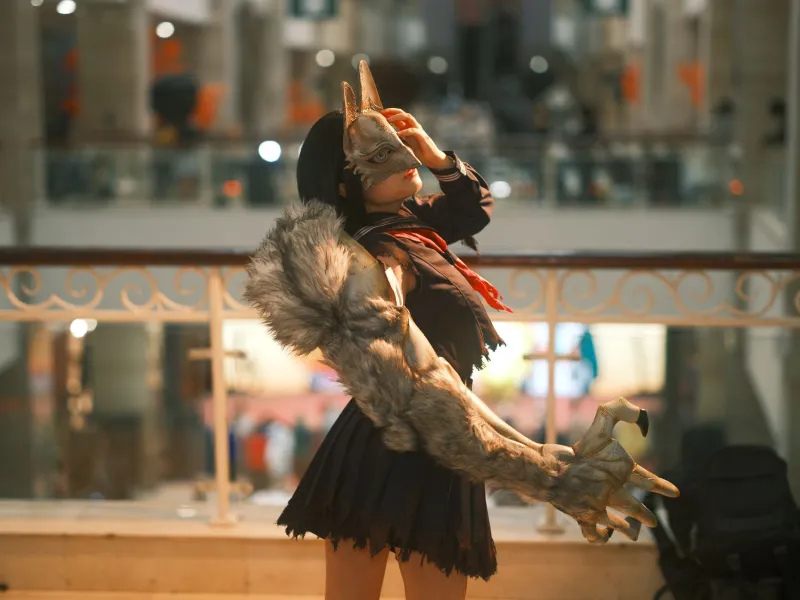
Photo: Ahmed Mo Abd Elaaty, CC BY-SA 4.0, via Wikimedia Commons
Let's set the scene. It's 11:47 PM on a Tuesday. The finale just dropped. Something catastrophic happened — a character death, a betrayal, a romantic moment so good it physically hurt — and before you've even fully processed your emotions, your fingers are already flying across your keyboard. Not to your college roommate. Not to your coworker Karen who "kind of watches the show sometimes." No. You're going straight to the group chat. The one with the people you've never met in person. The ones who get it.
Welcome to the fandom friendship paradox: the deeply modern, slightly chaotic, and genuinely beautiful phenomenon where your most emotionally intimate friendships are with people you know exclusively through a shared love of fictional universes, pop stars, or whatever extremely specific niche content has colonized your brain.
The "How Did We Even Get Here" Origin Story
Every fandom friendship has an origin story that sounds absurd out of context. "We met because we both replied to the same Reddit post defending a character everyone else hated." "We found each other in a Discord server at 2 AM arguing about episode rankings." "She commented on my fan art and we've been talking every single day for four years."
Miranda, 27, from Columbus, Ohio, has been close friends with a woman she knows only as "Stellarwing" for six years. They bonded in a forum dedicated to a fantasy TV series, survived that show's controversial finale together ("We were in a voice call. There was screaming," Miranda says), and have since migrated their friendship across three different platforms as fandom spaces evolved.
"She knows things about me that my actual family doesn't know," Miranda says. "My anxiety, my career stuff, my relationship drama. She's seen me go through everything. And we've never been in the same room."
This is not unusual. This is, in fact, extremely common — and researchers are starting to take it seriously.
Why Fandom Friends Hit Different
Here's the thing about making friends as an adult in America: it is genuinely terrible. The awkward coworker small talk. The neighborhood acquaintances you wave at but never actually talk to. The college friends who slowly drifted into the orbit of their own lives. Forming deep friendships after your mid-twenties is notoriously difficult, and social scientists have been wringing their hands about it for years.
Fandom sidesteps almost all of those barriers.
When you meet someone in a fan space, you already have a guaranteed conversation topic, a shared emotional investment, and — crucially — an immediate signal that this person is capable of caring deeply about something. That last part matters more than people realize. Passionate fans aren't just hobbyists. They're people who've demonstrated they can commit, obsess, analyze, and feel things loudly and without apology. Those are, it turns out, the exact qualities that make for a good friend.
Dr. Pamela Rutledge, a media psychologist who has written extensively on parasocial relationships and online community behavior, has noted that shared narrative experiences — like following the same show or rooting for the same fandom — create what she describes as "identity anchors" between people. You're not just talking about a TV show. You're revealing your values, your sense of humor, your emotional responses, your taste. You're showing someone who you are through the lens of what you love.
And because fandom spaces tend to be self-selecting communities of people who already embrace being enthusiastic and unashamed about their interests, there's a baseline level of psychological safety that most IRL social situations simply don't offer.
The Judgment-Free Zone Is Not a Marketing Slogan Here
Let's be honest: a lot of us have hobbies and interests we don't fully disclose to our offline social circles. Maybe you write fan fiction. Maybe you've spent more money on merchandise than you'd like to admit. Maybe you cried — properly cried — when a fictional character died and you are not about to explain that to your gym buddy.
Fandom friendships remove that particular layer of social anxiety entirely. When your friend also cried about the fictional character — when they also wrote the fan fiction and bought the merch — the vulnerability calculus changes completely. There's no performance of "being normal" required.
Jordan, 31, from Portland, has maintained a close-knit group of five friends he met through a long-running fan forum dedicated to a beloved animated series. "With my IRL friends, I edit myself," he says. "I'm aware of how I'm coming across. With these guys, I don't do that. We've seen each other at our most unhinged — like, full conspiracy-board energy about fictional plot holes — so there's nothing left to hide."
That absence of social performance, psychologists suggest, can actually accelerate emotional intimacy in ways that traditional friendships sometimes take years to achieve.
But Is It Real? (Spoiler: Yes, Obviously)
Skeptics — usually people who haven't experienced this particular flavor of friendship — like to suggest that online fandom friendships are somehow lesser. Temporary. Parasocial in the wrong direction. Something you'll eventually grow out of.
The data disagrees. Studies on computer-mediated communication have consistently found that people often disclose more personal information in text-based online relationships than in face-to-face ones, partly because the perceived distance reduces social risk. The friendships that form in those spaces can be — and frequently are — just as emotionally significant as any formed on a college campus or in a neighborhood.
And the longevity? Miranda and Stellarwing are still talking every day. Jordan's forum group did a group video call for one member's wedding last year. There are fan friends who've known each other for a decade, who've sent each other care packages during hard times, who've talked each other through grief and job loss and health scares — all without ever sharing physical space.
That said, these friendships aren't without their particular challenges. Platform migrations can fracture communities. Fandom drama — and there is always fandom drama — can stress even the closest bonds. And the logistical reality of never meeting in person can create a kind of ambient wistfulness, a low-level awareness that something is just slightly out of reach.
"I'd love to actually meet her someday," Miranda says of Stellarwing. "But also, I don't need to for it to count. It already counts."
The DittoHolic Take
Here at DittoHolic, we have a vested interest in this conversation — because this whole website exists, in some form, because of the kind of people who find their people through shared obsessions. The friend you made because you both had Opinions about that one episode? Valid. The Discord server that became your emotional support system? Real. The group chat that knows your deepest lore takes and your most embarrassing life updates? Arguably your most authentic social circle.
The fandom friendship paradox isn't a paradox at all, once you think about it. Of course the people who met you through something you genuinely love know you better. You showed up as yourself from the very first message.
And if your roommate doesn't get why you're emotional about a fictional universe, well — that's what the group chat is for.