You're the Algorithm Now: How Superfans Became the Invisible Executives Running Hollywood
Somewhere in a glass-walled conference room in Burbank, a Netflix executive is staring at a spreadsheet. On that spreadsheet is your viewing history. Your pause points. The exact timestamp where you stopped an episode, rewound twelve seconds, and watched the same scene four more times because the chemistry was immaculate. That executive is not thinking about what critics will say. They are thinking about you — the obsessive, devoted, magnificent weirdo who just accidentally greenlit a second season by losing your mind over a fictional slow burn.
Welcome to the fan economy. Population: you. Budget: billions.
The Old Hollywood Is Dead. Long Live the Fandom.
For most of the 20th century, Hollywood operated on a fairly straightforward power structure. Studios made things. Critics reviewed things. Audiences showed up — or didn't. The end. But somewhere between the rise of social media, the streaming wars, and the moment a passionate fanbase collectively saved Brooklyn Nine-Nine from cancellation through sheer screaming-into-the-void energy, the whole machine got rewired.
"Fan engagement metrics are now a primary input in renewal and development decisions," says one former streaming platform analyst who asked to remain anonymous because, in their words, "I still want to work in this industry." "It's not just about how many people watched. It's about how they watched, what they said about it, and whether they bought anything afterward."
That last part — the buying — is where things get really interesting.
Merchandise Is No Longer a Side Hustle. It's the Whole Business Model.
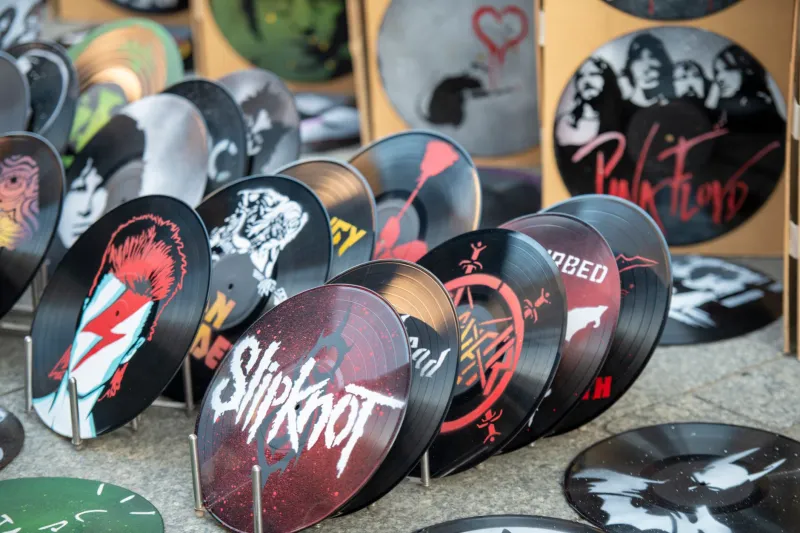
Here's a number that should make you feel both powerful and slightly used: the global licensed merchandise market is currently valued at over $340 billion, and entertainment properties — your fandoms, your franchises, your beloved fictional universes — account for a massive slice of that pie. When you bought that enamel pin, that officially licensed hoodie, or that inexplicably expensive Funko Pop of a character who appeared in exactly one episode, you weren't just expressing love. You were casting a vote.
Studios have gotten extraordinarily good at reading those votes. Merchandise sell-through rates — the speed at which products fly off shelves or out of online carts — now factor directly into whether a property gets expanded. A show with mediocre ratings but a merch line that sells out in 48 hours is, to a modern entertainment executive, a show with a future.
"The devoted fan who buys everything is worth exponentially more to us than the casual viewer who watches once and moves on," one licensing consultant explained during a panel at a 2024 entertainment industry conference. "We're not building for audiences anymore. We're building for communities."
Congratulations. You're a community. A very financially valuable one.
The Algorithm Doesn't Lie (But It Does Manipulate)
Streaming platforms have essentially turned fandom into a data science project, and honestly? The results are kind of terrifying. Netflix, Hulu, Max, and their competitors are tracking metrics that would make a CIA analyst blush: not just what you watch, but what you rewatch, what you recommend, what you search for after finishing an episode, and — crucially — what you say about it online.
Social listening tools now monitor fan conversation across Reddit, TikTok, X (fine, Twitter), and fan forums in near-real time. A show that's generating "unhinged" levels of fan theory content, even if its raw viewership numbers are modest, gets flagged as a high-engagement property. High engagement means passionate fans. Passionate fans mean spending. Spending means the studio wants more of whatever caused all this chaos.
This is why we're living in an era of increasingly niche, deeply specific content that would have been considered too weird or too risky a decade ago. Studios aren't swinging for the broadest possible audience anymore. They're hunting for your people — whoever your people are — because your people will show up, stay loud, and spend money in ways that casual fans simply won't.
The Uncomfortable Flip Side Nobody Wants to Talk About
Okay, here's where we have to get a little real, because DittoHolic didn't build its reputation on telling you only the fun parts.
The fan economy is genuinely empowering in ways that felt impossible twenty years ago. Fans have saved shows. Fans have influenced casting decisions. Fans have, on multiple documented occasions, made studios reverse creative choices through coordinated, passionate, and extremely loud campaigns. That's real power, and it's beautiful.
But — and this is a big but — studios are also getting very, very good at manufacturing the appearance of fan-driven decisions while still maintaining control of the narrative. "Engagement bait" is a real phenomenon: deliberately controversial creative choices designed to generate fan outrage and conversation, because outrage and conversation drive the same metrics as genuine enthusiasm. Your fury is, algorithmically speaking, indistinguishable from your love.
"The studios learned that the opposite of fan devotion isn't indifference — it's silence," one digital marketing strategist told us. "As long as fans are talking, the algorithm is happy. It doesn't really care whether they're happy."
Sit with that for a second.
So What Does This Actually Mean for What Gets Made?
In practical terms, the fan economy is reshaping Hollywood's creative priorities in ways that are already visible if you know where to look. Properties with built-in, proven fandoms get fast-tracked. IP with existing merchandise potential gets prioritized over original concepts. Shows are increasingly designed with "fandom moments" baked into the structure — scenes, relationships, and reveals engineered specifically to generate the kind of fan content that feeds the algorithm.
Is that cynical? Sure. Is it also kind of a love letter to the people who care the most? Also yes. It's both things simultaneously, which is very on-brand for an industry that has always been equal parts art and hustle.
What's undeniable is this: the most devoted fans — the ones who rewatch, who theorize, who buy the merch, who show up to fan conventions in elaborate handmade costumes, who run the Discord servers and write the lengthy Reddit analyses — are now the single most influential audience segment in entertainment history. Studios know it. Streamers know it. The brands that license your favorite characters absolutely know it.
You Have More Power Than You Think. Use It Accordingly.
Here at DittoHolic, we've always believed that being obsessed isn't a personality flaw — it's a superpower. And the data, as it turns out, agrees with us. Your passion is not just culturally significant. It is economically significant. It is industry-reshaping significant.
The next time someone side-eyes you for buying the limited-edition collector's box set or refreshing a show's renewal news at midnight, you can look them dead in the eyes and explain that you are, in fact, an unpaid executive producer making real decisions about the future of entertainment through the sheer force of your enthusiasm and your credit card.
You're not just a fan. You're the algorithm. You're the focus group. You're the greenlight committee.
Now go rewatch that episode again. The industry is counting on you.