You're Not Being Dramatic: The Very Real Science of Why a Fictional Character's Death Wrecks You Worse Than a Real Breakup
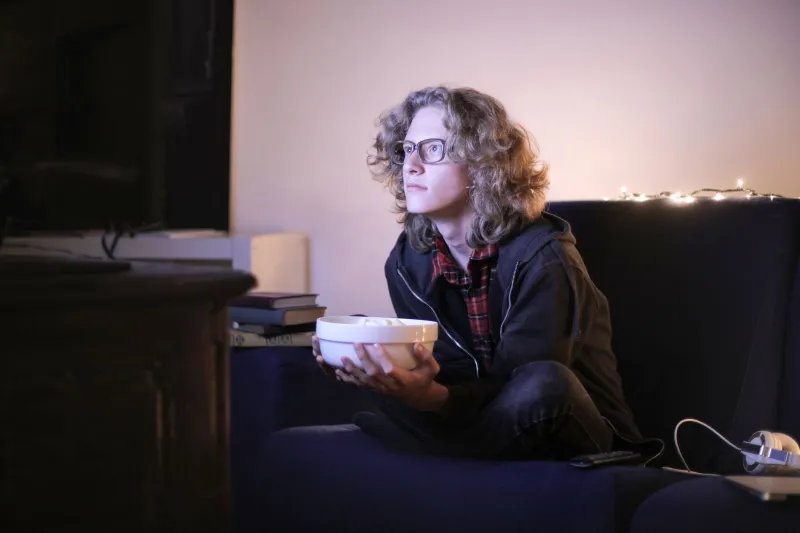
Let's set the scene. It's a Tuesday night. You're on your couch in your most beloved, structurally compromised sweatpants. You've got snacks. You are thriving. And then — without mercy, without warning, without any apparent concern for your emotional wellbeing — the writers kill your favorite character.
Suddenly, the snacks mean nothing. The couch offers no comfort. You are adrift in a cold, indifferent universe that just decided to take the one fictional person you truly understood.
Here's the thing: you are not being dramatic. You are not "too sensitive." You are, in fact, experiencing something that neuroscientists and psychologists have studied, documented, and taken very seriously. And it's about time the rest of the world caught up.
Your Brain Genuinely Cannot Tell the Difference
When you spend hours — sometimes years — with a character, your brain starts treating that relationship as real. Not metaphorically real. Neurologically real.
Researchers studying parasocial relationships (the one-sided bonds fans form with fictional characters, celebrities, and media personalities) have found that the same neural pathways activated by real human connection light up when fans engage with characters they love. The brain's social processing system doesn't have a dedicated "this is fake" filter running in the background. It just... connects.
So when that character dies, your brain registers loss the same way it would process losing someone from your actual life. The grief response kicks in. Cortisol spikes. The emotional processing centers go haywire. You cry into your throw pillow at 11:47 PM on a work night, and it is completely physiologically justified.
"I genuinely couldn't explain it to people who weren't fans," said Marissa, a 29-year-old teacher from Ohio who took a personal day after a major character death in a popular fantasy series. "I just kept thinking about how much of my life I'd spent with this character — watching them grow, rooting for them — and then they were just gone. It felt like a loss. Because it was."
The Grief Nobody Validates (But Should)
Here's where it gets complicated. Real grief — the kind that comes with funerals and casseroles from neighbors — gets social scaffolding. People understand. They give you space. They don't tell you to "just get over it" three days in.
Fandom grief? You're largely on your own. Worse, you might actively be mocked for it.
This lack of what psychologists call "disenfranchised grief" — grief that society doesn't officially recognize or sanction — can actually make the emotional experience harder to process. When you can't openly mourn, when you feel embarrassed to admit how much you're hurting, the grief gets stuck. It doesn't move through you the way it should.
Dr. Jennifer Barnes, a psychologist at the University of Oklahoma who has studied fiction and social cognition, has argued that the emotional responses people have to fictional events are genuine emotional responses — full stop. The content being fictional doesn't make the feeling fictional. Your brain produced real chemicals. You experienced real sadness. That deserves real acknowledgment.
Tyler, a 34-year-old software developer from Portland, put it plainly: "I cried more when [a beloved animated character] died than I did at my actual breakup six months earlier. And I felt so guilty about that. But looking back? That relationship with the character was years of consistent emotional investment. Of course it hit hard."
Why It Sometimes Hits Harder Than Real Breakups
Okay, let's address the headline directly, because it deserves its moment.
Real breakups are painful in ways that are messy and complicated — there's blame, there's awkwardness, there's the mutual friend situation, there's seeing their Instagram Stories when you definitely should not have. The grief is real, but it's tangled up with anger, relief, confusion, and the logistical nightmare of figuring out who keeps the streaming password.
Character death is different. It's pure grief. There's no ambiguity, no complicated feelings about what went wrong. You loved them. They're gone. The end.
Also — and this matters — characters are often idealized in ways real people simply cannot be. A character exists specifically to be compelling, to be lovable, to embody qualities that resonate deeply. You've never seen them be annoying about loading the dishwasher. They've never let you down in a mundane, grinding, Tuesday-afternoon kind of way. The relationship, parasocial as it is, has been consistently, intentionally meaningful.
So when they die, you're not just losing a character. You're losing a carefully constructed emotional anchor that the show's writers spent seasons helping you build.
"It sounds absurd when I say it out loud," admitted Dana, a 26-year-old graphic designer from Atlanta, "but that character was there for me during some genuinely hard times in my life. Watching the show was comfort. And then they killed her off and it felt like that comfort was ripped away too."
The Spiral Is Real — And It Has Stages
Fandom grief tends to follow a recognizable pattern that any veteran fan will immediately clock.
First comes denial — the frantic Reddit thread-reading, the theory-crafting, the desperate hope that it was a dream sequence or a body double or literally anything else. Then comes anger, usually directed at the writers, the showrunner, and anyone who says the death was "narratively necessary" (a phrase that should be banned). Then bargaining — petitions, fan campaigns, the deeply optimistic belief that enough Twitter pressure can resurrect a fictional human being. Then depression, which is the couch phase, the rewatch phase, the eating cereal for dinner phase. And finally, eventually, acceptance — or at least a grudging acknowledgment that the show must go on, even if you're watching it through narrowed, suspicious eyes.
The fact that this mirrors the clinical stages of grief is not a coincidence. It is, again, your brain doing exactly what brains do when they lose something they valued.
So What Do You Actually Do With This?
First: give yourself permission to feel it. Seriously. The cultural pressure to brush off fandom grief as silly or embarrassing is doing real psychological damage by preventing people from processing legitimate emotional experiences. You don't have to justify your sadness to anyone.
Second: find your people. The communal grieving that happens in fan spaces — the shared posts, the tribute edits, the collective wailing in comment sections — isn't just cathartic. It's functional grief processing. It validates the loss in a way that helps the feeling move through you rather than getting stuck.
Third: maybe, just maybe, accept that loving fictional characters this much isn't a flaw. It's evidence of a rich inner life, a deep capacity for empathy, and an ability to form meaningful emotional connections. Those are genuinely good things to be.
Your favorite character died. You're allowed to be devastated. Science says so. DittoHolic says so. And honestly, anyone who tells you otherwise probably just hasn't met the right fictional person yet.
Give them time. They'll understand eventually.